


Reason Behind the Price Hike of RAM & SSD
Reason Behind the Price Hike of RAM & SSD Increased by 500%—Complete Guide (2025) In recent months, laptop and PC users around the world have faced an unexpected shock: the prices of RAM and SSD storage have increased by almost 500%. Once affordable components are now five times more expensive, and this sudden jump has…
Reason Behind the Price Hike of RAM & SSD Increased by 500%—Complete Guide (2025)
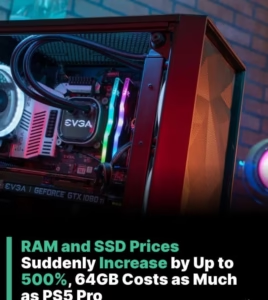
In recent months, laptop and PC users around the world have faced an unexpected shock: the prices of RAM and SSD storage have increased by almost 500%. Once affordable components are now five times more expensive, and this sudden jump has created confusion, frustration, and concern among buyers. At Laptop Hubs, we believe it’s important to explain the real reasons behind this massive price hike and help users understand what to expect in the coming months.
In this blog, we will explore all major factors behind this price increase and guide you on how to deal with the situation smartly.
1. Global Chip Shortage—The Main Reason Behind the Spike
The biggest reason for the 500% increase in RAM and SSD prices is the global semiconductor shortage. RAM and SSD both use advanced memory chips (like DRAM and NAND flash). These chips require specialized manufacturing plants, which are expensive and limited in number.
When demand rises suddenly but production cannot increase at the same speed, prices go up. Over the past year:
-
Several chip manufacturing plants paused production.
-
Some factories faced natural disasters and power shortages.
-
A sudden global demand for laptops, tablets, and servers increased memory consumption.
Because of these issues, the supply became tight while demand kept growing—leading to a massive price jump.
2. High Demand in AI and Cloud Data Centers
Another major factor is the rapid expansion of Artificial Intelligence (AI) technologies. AI requires huge computational power, which means:
-
More servers
-
Higher RAM capacity
-
Faster SSDs with large storage
Companies like Google, Microsoft, Amazon, and NVIDIA are buying RAM and SSDs in bulk for their data centers. As a result, the consumer market (laptop and desktop users) receives less stock, causing shortages and price hikes.
Simply put, big companies are buying everything before it even reaches the retail market.
3. Increase in Manufacturing Costs
During the last two years, manufacturing costs for memory chips have risen due to:
-
Higher electricity prices
-
Expensive raw materials
-
Increased labor costs
-
Costly transportation and shipping
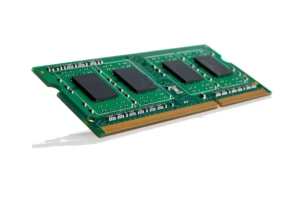
Latest-generation 16 GB RAM module for desktop computer, high throughput, random access memory, isolated on a white background
Every time the manufacturing cost increases, the final product becomes more expensive. Even packaging and distribution costs have gone up, contributing to the 500% jump.
4. Currency Fluctuations and Import Duties
For countries that import RAM and SSDs (including South Asian countries), local prices are also affected by:
-
Dollar rate fluctuations
-
Import taxes
-
Custom duties
-
Shipping delays
When the local currency weakens, the price of imported technology rises automatically. This has also pushed RAM and SSD prices to their highest levels in years.
5. Retailers Stockpiling Due to Shortage
Many wholesalers and retailers are stockpiling memory components because they expect prices to go even higher. This creates artificial scarcity in the market. When supply decreases and demand increases, prices automatically rise.
Some sellers are even charging extremely inflated prices for RAM and SSDs because customers have no alternative but to buy.
6. New Generation Technology (DDR5 & NVMe Gen 4/5)
Recently, new generations of RAM and SSD technology have been introduced:
-
DDR5 RAM (faster but more expensive)
-
NVMe Gen 4 & Gen 5 SSDs
Whenever new technology arrives, older models become limited, and manufacturers stop producing them. This causes:
-
Less supply of DDR4 RAM
-
Less availability of SATA SSDs
-
More focus on high-end, expensive models
-
This shift has also raised prices significantly.
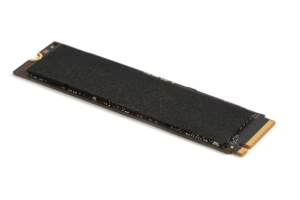
What Do Customers Need to Do Right Now? Astute Purchasing Advice
Here are some useful recommendations if you intend to update your laptop or PC:
1. Upgrade only when absolutely necessary
Avoid increasing RAM or SSD at this time if your system is operating well. When supply stabilizes, prices may decrease.
2. Examine Prices Before Purchasing
Instead of purchasing from a single store, look at other retailers or internet sites.
3. Pick a Trustworthy Brand
4. If the supplier is reliable, prefer used or refurbished.
A certified reconditioned item could be a smart choice if you need an upgrade quickly and have a tight budget.
5. Await Sales or Promotions
Prices frequently decrease during:
Sales for the New Year
Tech celebrations
Events with special discounts.
Will Prices Come Back to Normal?
Experts believe that RAM and SSD prices will remain high for the next few months. However, once:
-
new manufacturing plants become operational,
-
supply increases, and
-
global demand stabilizes,
Prices may gradually decrease again.
But reaching previous low prices may take time, and some models may never return to their old rates.
Final Thoughts
The 500% price increase in RAM and SSDs is a result of multiple global factors—chip shortage, AI demand, manufacturing challenges, and currency fluctuations. As a consumer, the best approach is to buy wisely and upgrade only when necessary.
At Laptop Hubs, we will continue to update you about the latest market trends, price changes, and best buying guides so you can make informed decisions.